
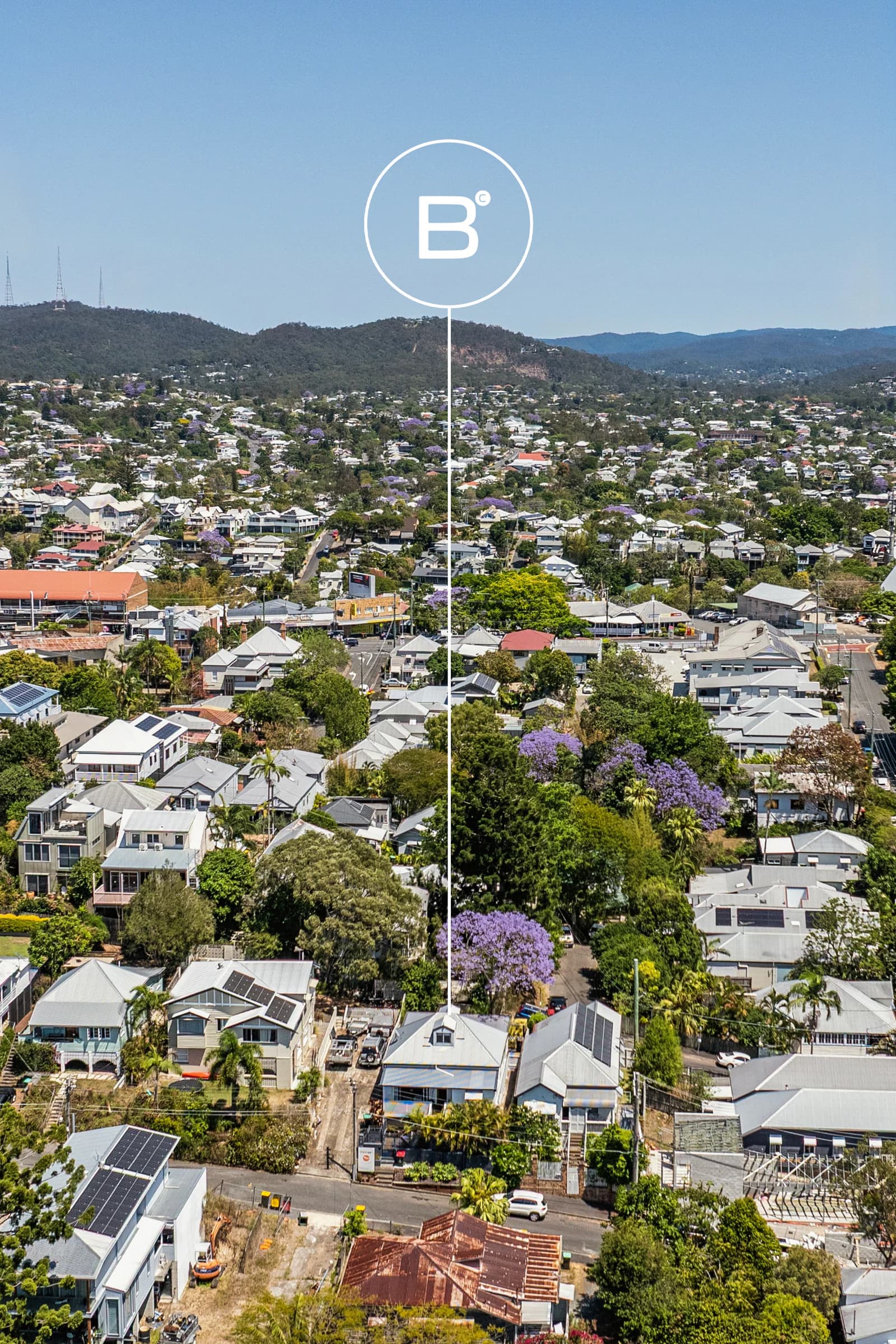

Red Hill is only a few kilometres from the city, and it's one of the steepest places you can buy in Brisbane.
Both of those things shape what it's like to live here.
What Red Hill feels like day to day
This is an old inner suburb, mostly homes, set on hills. The streets climb, dip and wind back on themselves, and plenty of the houses sit up high with a view back towards the city or out over the western ridges. On a still evening you can sit on a front verandah and look straight across the rooftops, and for a lot of buyers that view is what gets them in the car in the first place.
The trade is that almost nothing here is flat. You notice it the first time you walk home with the shopping.
Musgrave Road, Waterworks Road and the local end of things
Day to day life runs along two roads. Musgrave Road and Waterworks Road carry the shops, cafes and small businesses, and between them they cover most of what you need without a trip into the city.
At the bottom of Musgrave Road sits the Normanby Hotel, which has been a Red Hill landmark for a very long time. Further up is St Brigid's, the big brick church that you can pick out from a long way off and that most locals use to give directions. On Enoggera Terrace, the old Red Hill Skate Arena building now houses the Red Hill Cinemas, which is exactly the sort of reuse that suits the suburb. The Broncos Leagues Club off Fulcher Road rounds it out for anyone who likes their footy close to home.
Getting around
There's no train station in Red Hill. Buses run along the main roads and the city is close enough that plenty of people ride, or at least tell themselves they will.
That makes the individual street matter more than it would elsewhere. A house a short walk from Musgrave Road or Waterworks Road lives very differently to one at the top of a long climb. Walk the route to the bus stop and the shops before you fall for the view.
What the hills mean for the house itself
This is where we spend the most time with buyers in Red Hill, because the slope changes the practical side of a home.
Parking is the first thing. Plenty of older homes were built well before anyone owned two cars, and on a steep block the driveway, the garage and even getting a car off the street can be tight. The second is access. Long flights of front stairs are part of the charm when you're thirty and part of the problem when you're carrying a toddler or a new fridge. The third is the land under the house. Sloping blocks raise sensible questions about drainage, retaining walls and what it would cost to build under or extend, and those questions deserve answers before you commit rather than after.
None of that is a reason to avoid Red Hill. It's a reason to look past the kitchen and the view and ask how the house works on its block.
Schools and families
Families here look to schools in the surrounding suburbs, and which one depends on the exact street. If schooling is part of the move, check the catchment for the specific address rather than the suburb name.
Who Red Hill suits
Red Hill works best for people who want to live close in, value character and outlook, and don't mind a hill. Young professionals, couples and families who have made peace with the stairs all do well here. Buyers who need level ground, easy parking or a flat walk everywhere usually find the suburb asks too much of them.
Before you make an offer on a house in Red Hill, park the car, walk to the shops and walk back up again. You'll learn more about the house in ten minutes than any listing will tell you.
Written by Jack Freestone, Buyers Collective